Wax fails unevenly
Coating varies by batch. Wet performance you cannot predict.
Ice contact, condensation, high humidity and long transit times are where conventional cartons lose strength. These are the scenarios 3R Box is designed around.
Damaged cargo, claims and rejected shipments are.
Coating varies by batch. Wet performance you cannot predict.
Ordinary cartons lose most of their strength within hours of getting wet.
Bulky, unprintable, bead debris — and restricted in a growing list of markets.
One rejected seafood shipment outweighs years of box savings.
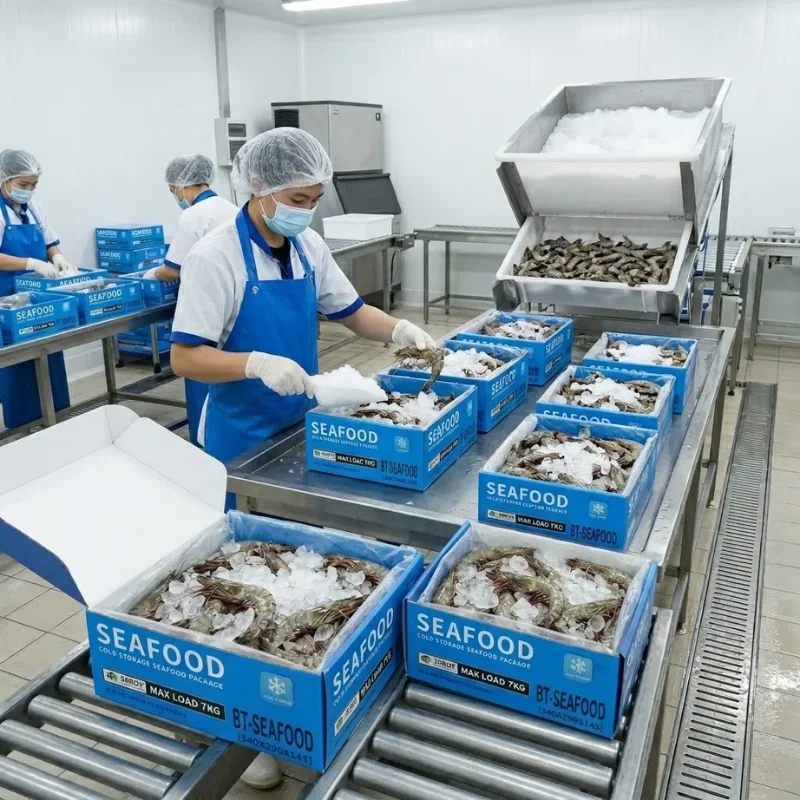 Priority use case
Crab, shrimp, salmon, shellfish — cargo where one failure erases the margin.
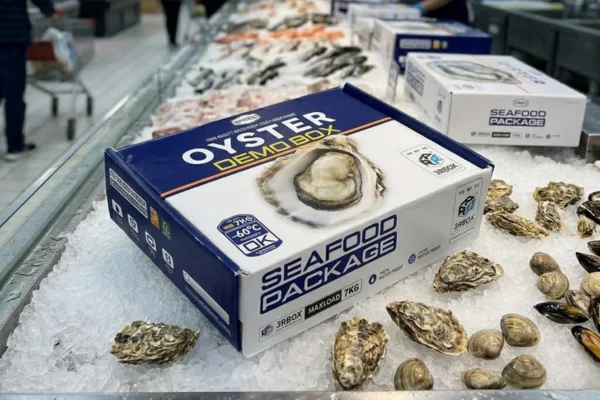 Ideal scenario
A waterproof box that still looks premium when the customer opens it.
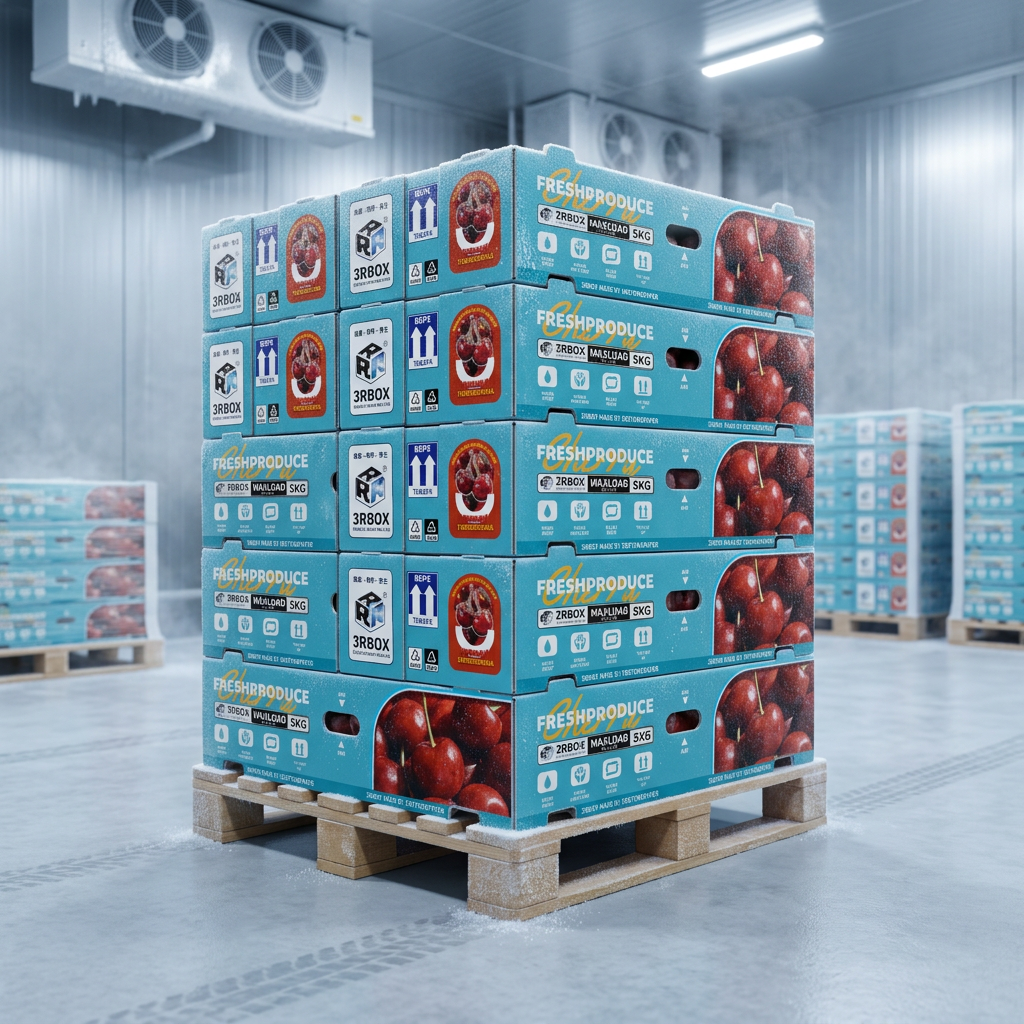 Priority use case
Pallets that stay standing through long, humid storage cycles.
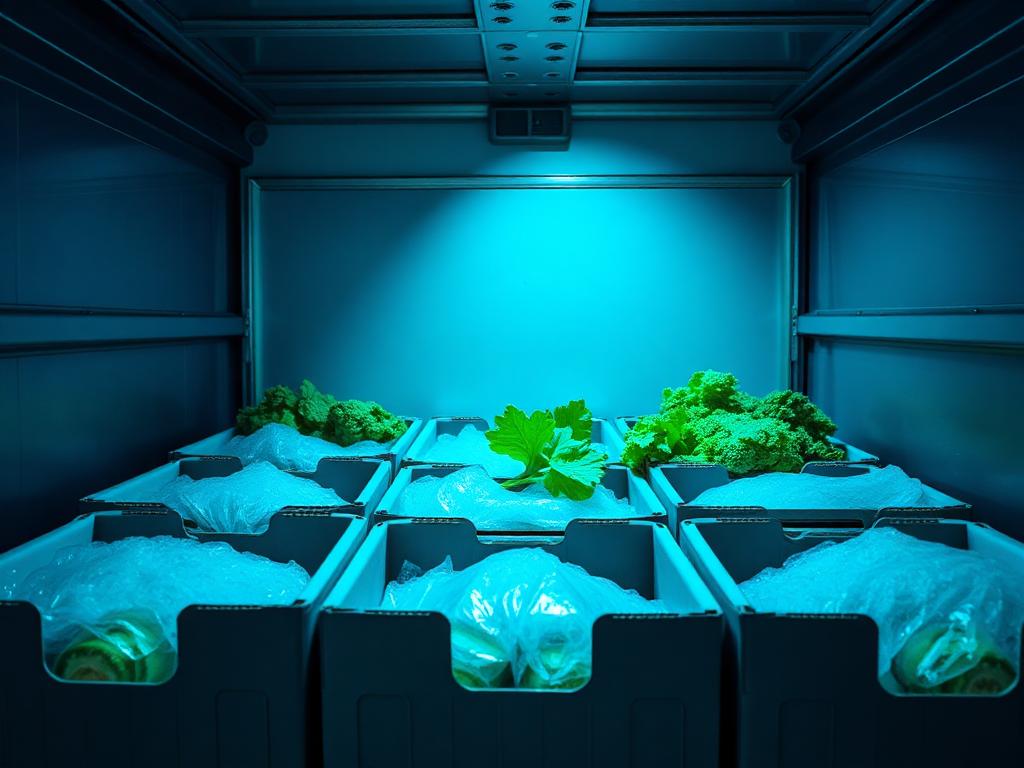 Ideal scenario
Survives direct water contact before packing and moisture in transit.
Send us your box size and route. We'll quote a match.
Same enemy every time: moisture, cold, pressure and time.
Refrigerated sea freight
25 days at sea, ice melt and 10-high pallets. Wax cracks; the bottom row pays.
Who it's for: Exporters shipping crab, salmon, shrimp and shellfish to North America, Europe and Japan.
Wax is a surface treatment, so performance varies by supplier, batch and coating thickness. Under sustained ice-water exposure micro-fractures let moisture reach the corrugated substrate, and stacking integrity fails first at the bottom of the pallet. 3R Box is waterproof at the material level, so there is nothing to crack, delaminate or vary — and it runs on existing export packing lines with no equipment change.
Branded cold chain
EPS can't be printed. Wax prints dull. Both arrive soft after the ice packs melt.
Who it's for: Premium fresh food brands and platform suppliers where unboxing is part of the product.
Ice packs and dry ice add internal condensation across the delivery window, so a box that looks good on the packing line can arrive deformed. The stone-based surface holds graphics through the cold chain without fading, bleeding or surface degradation, while the structure keeps its shape in direct contact with melting ice.
High-humidity stacking
At 85–95% RH, ordinary cartons absorb moisture until pallets go down.
Who it's for: Seafood wholesale markets, cold storage operators and high-turnover distribution centres.
Wax-coated performs better than plain corrugated but is still limited by coating consistency and corner and seam integrity. Because 3R Box does not rely on staying dry, stacking strength stays predictable through long humid cycles — which makes high-density space planning reliable instead of optimistic.
Hydrocooling & condensation
Hydrocooling soaks the box before it ever ships. Then 35 days of condensation.
Who it's for: Blueberry, grape, citrus and tropical fruit exporters using hydrocooling and sea freight.
Conventional produce cartons can lose 50–70% of structural strength after 4–8 hours of humidity exposure. On long routes — Chilean blueberries to Europe, tropical fruit to Japan — a box that survives hydrocooling but fails at sea creates loss at the most expensive point in the chain. 3R Box leaves the packing house and arrives at the port in the same condition, and the printable surface removes the need for a separate branded outer carton.
EPS replacement
EPS is banned in 12+ US states, sheds beads, and can't be printed or flat-packed.
Who it's for: Fish markets, regional distributors and restaurant, hotel and catering supply businesses.
Where insulation comes from ice packs or refrigerated vehicles rather than the box itself, 3R Box is a direct EPS replacement — no bead contamination, no disproportionate storage volume, full-surface brand printing, and no equipment change or operator retraining. Restrictions are active in New York, California, New Jersey, Colorado and Virginia, expanding in Australia, and committed in France by 2030.
Pain point, payoff and the regulation pushing the change.
| Application | Primary pain point solved | Key benefit | Regulatory driver |
|---|---|---|---|
| Seafood export (sea freight) | Wax coating failure in prolonged ice-water exposure | Consistent wet structural strength across long-haul transit | EU PFAS ban (Aug 2026) |
| Fresh e-commerce | Cannot print on EPS; wax-coated prints poorly | Full-colour brand printing plus cold chain structural integrity | — |
| Seafood wholesale / cold storage | Box collapse in sustained high-humidity environments | Maintained stacking strength in 85–95% RH conditions | — |
| Fruit & vegetable cold chain | Structural failure after hydrocooling or condensation | Hydrocooling-compatible; holds integrity through sea transit | EU PFAS ban (Aug 2026) |
| Short-haul seafood delivery | EPS bans, bead contamination, no printability | EPS-compliant flat-pack replacement with print capability | EPS bans (12+ US states, Australia, France) |